On this page
What "Biohacking Your Face" Actually Means
The word biohacking gets thrown around a lot. In the context of your face and skin, it means something very specific: using science-backed methods to optimise how your skin regenerates, repairs, and ages over time.
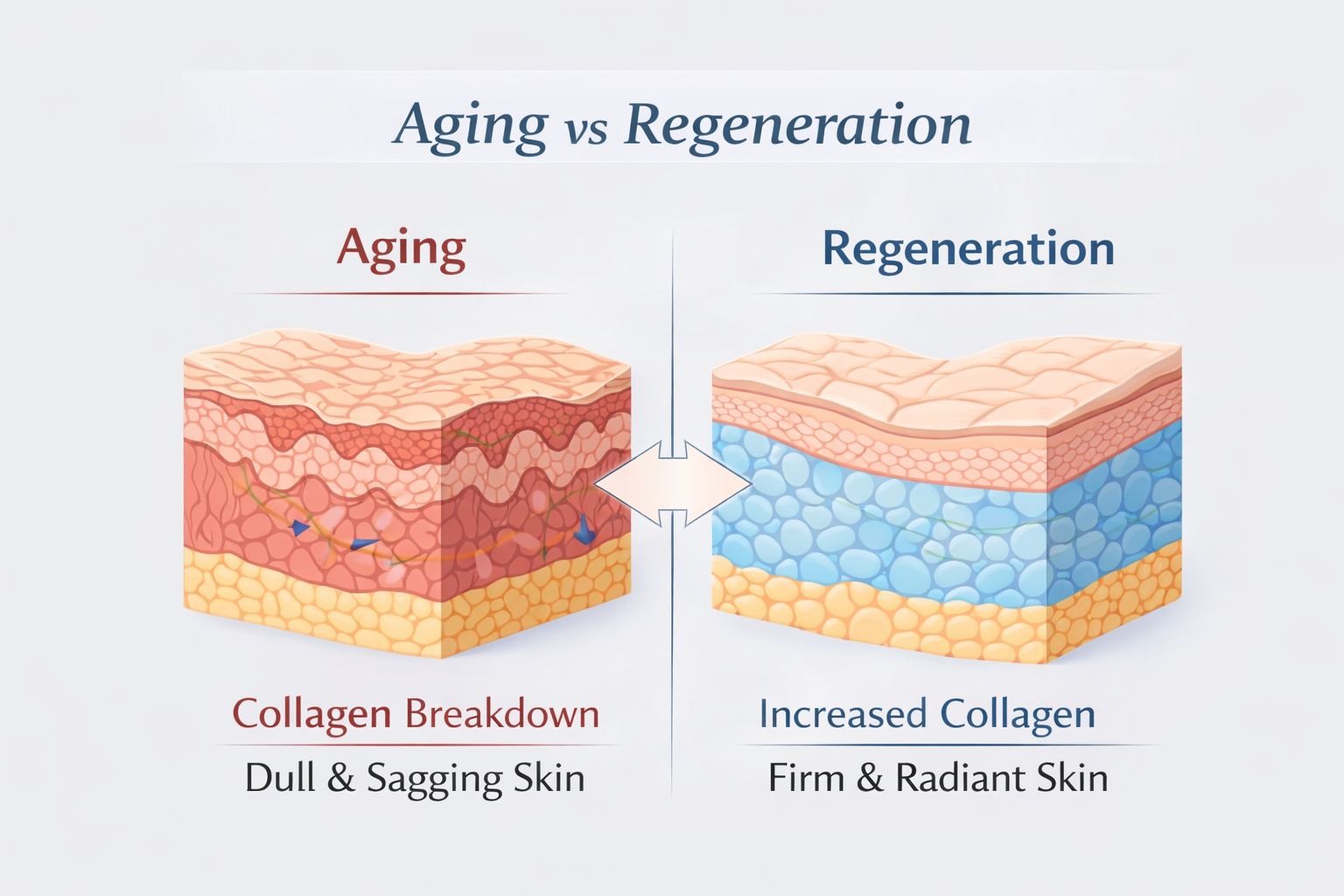
This is not about adding products to your shelf. It is about understanding what is actually happening inside your skin and intervening at the right level. Your skin is constantly breaking down and rebuilding itself. After your mid 20s, the rate of breakdown starts to outpace the rate of repair. Collagen production slows. Elastin weakens. The structural scaffolding that keeps your face looking firm and lifted gradually loses its strength. This is why treatments like HIFU and polynucleotides have become so central to modern regenerative aesthetics.
Facial biohacking is about tipping that balance back in your favour. Not with shortcuts, but with treatments that stimulate your body's own biology to function better for longer.
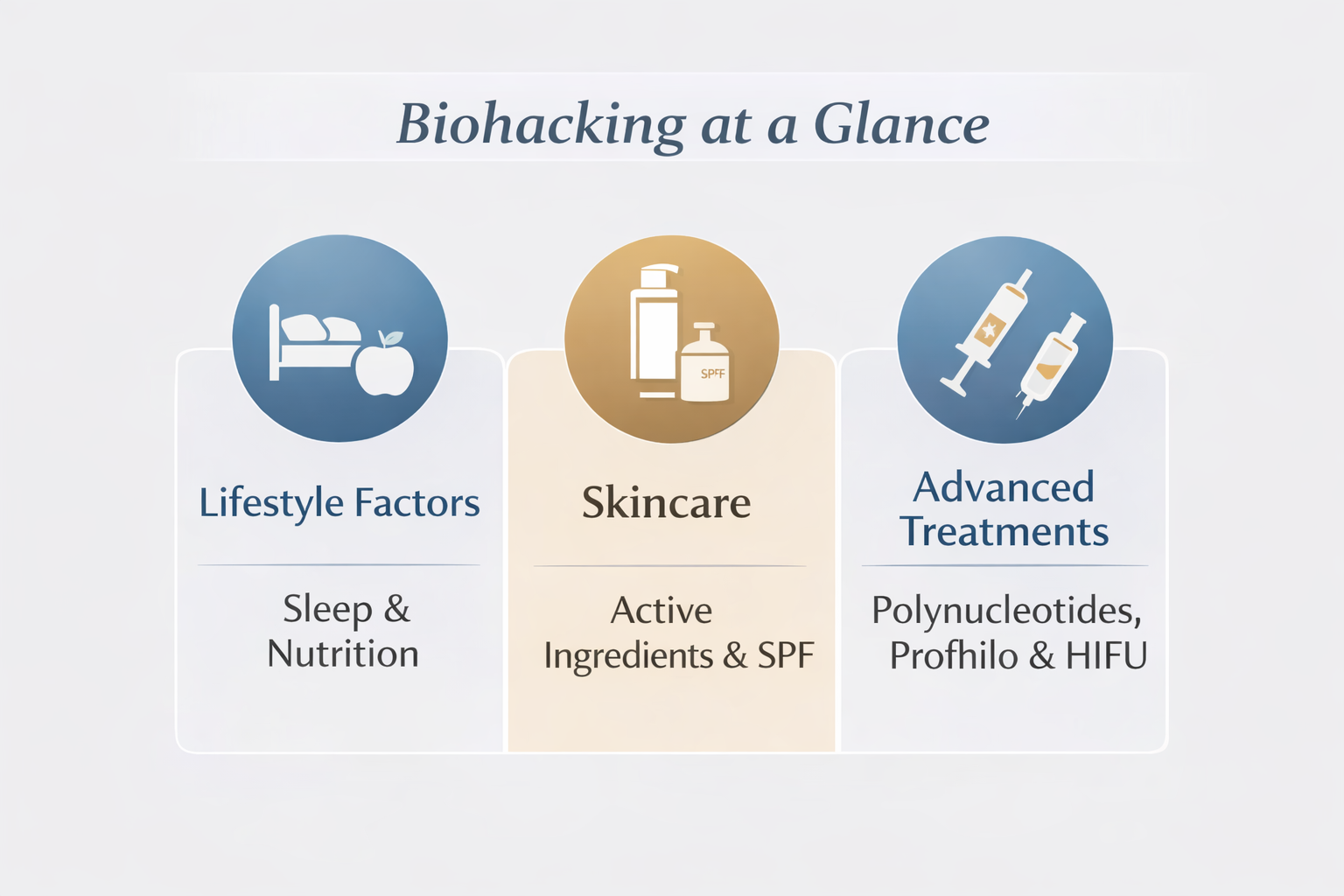
The Three Levels of Facial Biohacking
Sleep, hydration, and nutrition form the foundation. Without these, no treatment will perform at its best. Quality sleep allows your skin to repair overnight. Proper hydration supports cellular function. A nutrient-rich diet provides the building blocks your body needs for collagen synthesis. This level costs nothing and underpins everything else.
SPF is non-negotiable. UV damage is the single biggest driver of premature skin ageing, and a good broad-spectrum sunscreen protects against it daily. Beyond that, active ingredients like retinoids, vitamin C, and niacinamide can support cell turnover and antioxidant defence. This level maintains what you have and provides a solid baseline. But it can only go so deep.
Peptides sit between skincare and clinical treatments. They are not just surface-level ingredients, but they also do not reach the same depth as injectables. Instead, they act as biological signals that support how your skin repairs, regenerates, and functions over time.
In a biohacking approach, this is where peptides like Glow, Copper, and BPC-157 come in.
- •Glow peptides support overall skin quality, hydration, and brightness
- •Copper peptides stimulate collagen production and improve firmness
- •BPC-157 supports healing, inflammation control, and skin barrier repair
This is often the missing layer for clients who are not quite ready for injectables, but want more than skincare alone can offer. I break this down in more detail in my guide to the best peptides for skin.
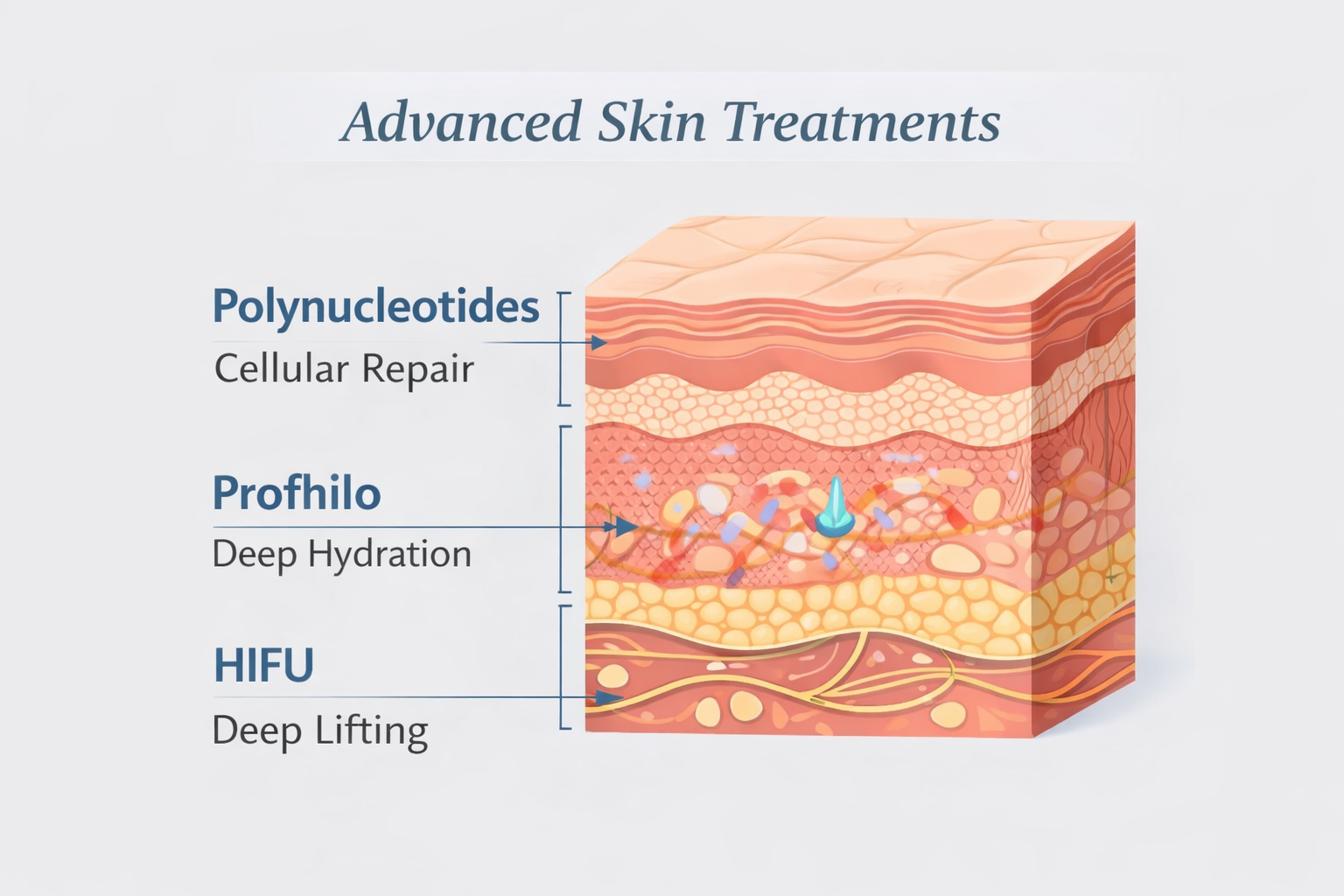
This is where real biohacking begins. Clinical treatments reach layers of the skin that no cream or serum can access. They trigger biological responses that your body cannot achieve on its own at this stage. This is the level that changes the trajectory of how your skin ages. The three treatments I use most at my Fulham clinic for facial biohacking are polynucleotides, Profhilo, and HIFU.
Polynucleotides: Cellular Repair and Regeneration
If there is one treatment that genuinely qualifies as skin biohacking, it is polynucleotides. These are purified DNA fragments that, when injected, activate your body's fibroblasts to produce new collagen and repair damaged tissue at a cellular level. I have written a detailed breakdown of how polynucleotides compare to Profhilo if you are trying to understand the difference between the two.
Triggers cellular regeneration. Stimulates fibroblast activity to produce new, healthy skin cells and rebuild structural proteins.
Thin or crepey skin, under-eye hollowing, acne scarring, neck and decolletage damage, and anyone whose skin quality has noticeably declined.
The DNA fragments act as biological signals, telling your body to repair and regenerate tissue that it has stopped maintaining on its own.
If you are noticing thinning, crepey skin or under-eye hollowing and want to actually rebuild your skin rather than just hydrate it, this is where polynucleotides work best. It is the treatment I recommend when someone's skin needs genuine repair, not just a refresh.
Profhilo: Deep Hydration and Skin Quality
Profhilo is a concentrated hyaluronic acid treatment that hydrates the skin from within. It spreads through the tissue and attracts water, giving the skin a deeper, more sustained hydration than any topical product can achieve. For clients who are deciding between this and polynucleotides, I explain the difference in my guide to polynucleotides vs Profhilo.
Bio-remodels the skin by providing intense hydration and stimulating mild collagen and elastin production.
Dull or dehydrated skin, early ageing, loss of glow, and maintaining skin quality between more intensive treatments.
The high concentration of hyaluronic acid draws and holds water deep in the tissue, improving elasticity, brightness, and overall skin tone.
If your main concern is dullness, dehydration, or a loss of glow that good skincare alone cannot fix, this is usually the right starting point. See does Profhilo really work for a detailed look at results and who it suits best.
HIFU: Structural Lifting and Tightening
HIFU uses focused ultrasound energy to reach the deepest structural layer of the face, the SMAS layer, which is the same layer a surgeon would tighten in a facelift. It stimulates new collagen production in this deep tissue, resulting in a natural lifting and tightening effect over the following months.
Delivers focused ultrasound energy to the deep SMAS layer, triggering collagen remodelling and tissue tightening.
Jawline softening, early jowling, neck laxity, and anyone who wants a non-surgical lift with no downtime.
The ultrasound energy creates precise thermal points in the deep tissue. Your body responds by producing new, strong collagen at that depth, gradually lifting and firming the face.
If your jawline has started to soften, or you are noticing early jowling or neck laxity and want to address it without surgery, this is the treatment to consider first. I have written a detailed guide on the best age to start HIFU treatment if you are wondering whether your skin is ready.
Not sure where to start?
Send me a photo and I will tell you exactly which treatment your skin actually needs.
No pressure. No sales pitch. Just an honest read on your skin from someone who treats this every day in Fulham.
Message me on WhatsAppUsually replies within 1 hour.
Where Do Exosomes Fit Into Facial Biohacking?
If polynucleotides are the builders, exosomes are the communicators. They are tiny signalling molecules released by cells that carry instructions telling other cells what to do. In the context of skin rejuvenation, exosomes essentially tell your cells to repair, regenerate, and produce more collagen.
The difference matters. Polynucleotides physically provide the raw material your fibroblasts need to rebuild tissue. Exosomes send the signals that coordinate that rebuilding process. One delivers the bricks. The other draws the blueprint.
At my Fulham clinic, I often use exosomes alongside microneedling. The micro-channels created by microneedling allow the exosomes to penetrate deeper into the skin, amplifying their signalling effect. This combination works particularly well for clients who want to improve overall skin quality, texture, and radiance without any filler or volume change.
Exosomes are especially useful when your skin needs a communication reset. If you want to speed up results or improve healing after treatments, this is where exosomes make a noticeable difference. If your skin has been sluggish, dull, or slow to respond, they can help restart the repair signals that your body has slowed down on its own.
And this is where the real power of facial biohacking shows itself. It is not about choosing one treatment. It is about layering treatments that work at different levels, so the signalling, the building, and the structural support all happen together. I have written a detailed comparison of exosomes vs polynucleotides if you want to understand exactly how they differ.
What This Looks Like in Practice
If you are in your 30s or 40s and starting to notice changes in your skin, biohacking is not about doing more. It is about choosing the right treatments at the right time.
I see this regularly at my Fulham clinic. Someone comes in because their skin looks tired and flat, even though they sleep well and use good products. Or their jawline has softened and they want to address it without filler or surgery. For the jawline concern, HIFU in Fulham is often the first conversation we have.
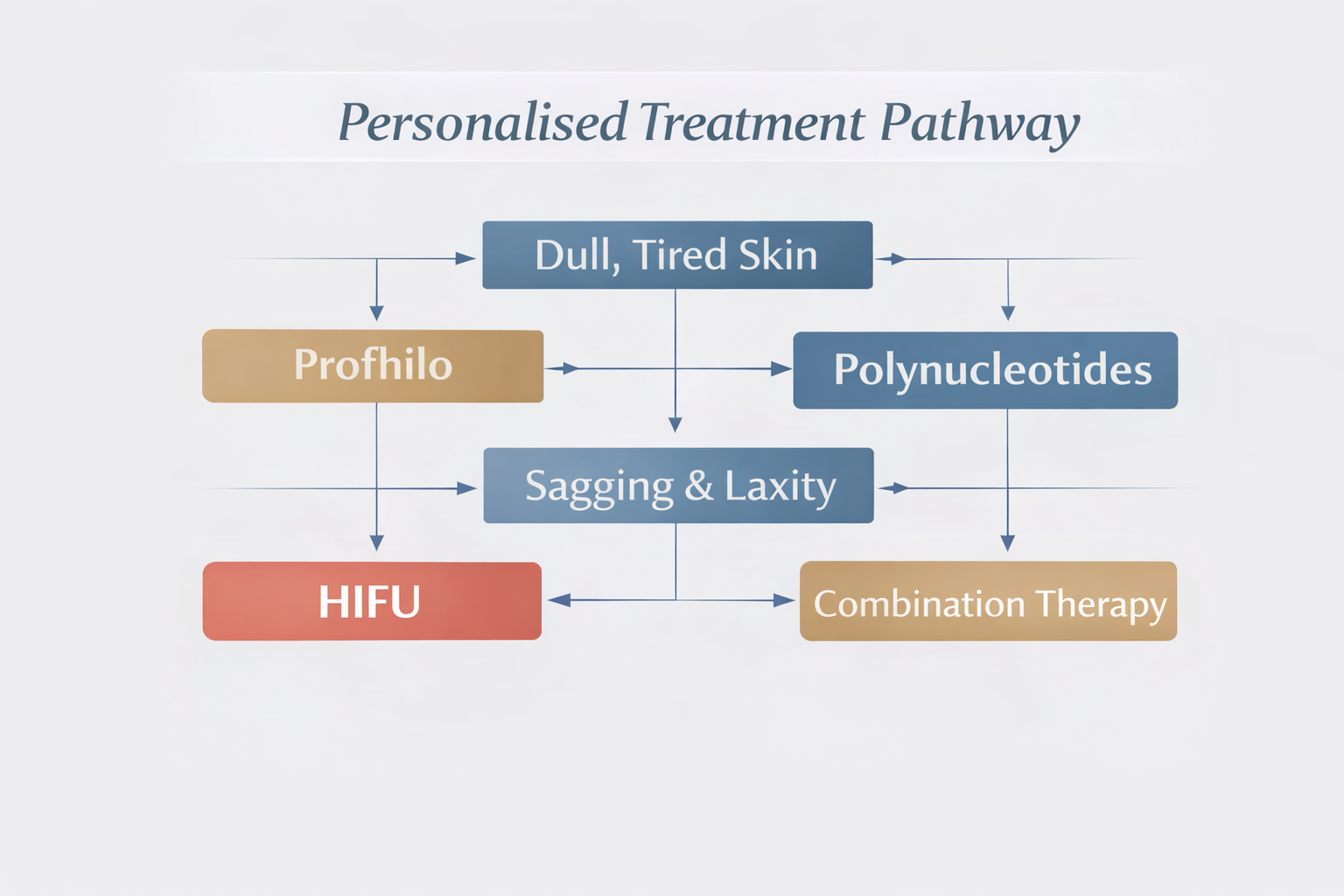
What I do is assess which level their skin needs support at. Sometimes it is hydration, and that is where Profhilo works best. Sometimes it is cellular repair, which is where polynucleotides come in. Sometimes it is structural tightening with HIFU. Often it is a combination of two or three, sequenced in the right order over a few months.
In some cases, I also include peptides as part of the strategy, especially when the focus is improving skin quality, healing, or supporting results between treatments.
That is what biohacking your face actually looks like. Not a single treatment. A strategy built around your skin. If this sounds like you, this is exactly where I would usually start the conversation.
What Actually Works vs What Does Not
Evidence-Based
- +Polynucleotides for genuine cellular regeneration
- +Profhilo for deep, sustained skin hydration
- +HIFU for non-surgical lifting and tightening
- +Exosomes with microneedling for cellular signalling and repair
- +Consistent SPF to prevent UV-driven collagen loss
- +Retinoids for long-term cell turnover support
- +Quality sleep for overnight skin repair
Overhyped or Unproven
- xLED masks marketed as skin transformers (limited evidence at home-use intensity)
- xCollagen supplements (most are broken down in digestion before reaching your skin)
- xFacial taping or gua sha as anti-ageing (no structural change)
- xSingle-ingredient miracle serums (skin biology is more complex than one molecule)
- xIce rolling for "lifting" (temporary puffiness reduction only)
- xExpensive creams that claim clinical-level results
Is This You?
If your skin is starting to feel dull, less firm, or just not as fresh as it used to, but you do not want filler or anything obvious, this is exactly where biohacking your skin comes in.
Most clients I see are not looking to change their face. They just want to look healthier, fresher, and more lifted.
This is where treatments like polynucleotides, Profhilo and HIFU work differently. They do not add. They rebuild.
If your skin feels dull and dehydrated but not sagging, Profhilo is usually the best starting point. If you are starting to notice laxity or early sagging along the jawline, this is where HIFU becomes more effective. And if your skin quality has genuinely declined and needs rebuilding from within, polynucleotides are where I would begin.
Ready for a Personalised Skin Strategy?
If you want a personalised approach to improving your skin long-term, I assess your skin in person and guide you properly. No guesswork, no one-size-fits-all plan. Just an honest assessment and a clear path forward. If you are still unsure which direction to go in, I break this down in more detail in my guide to polynucleotides vs Profhilo.
Book a Skin AssessmentFulham, London. In-person consultations available.
Frequently Asked Questions
Related Reading
Best Peptides for Skin: Glow vs Copper vs BPC-157
Which peptide actually fits your skin and what to expect.
Read articleAre Polynucleotides Worth It?
Results, timeline, cost and who should get them.
Read articleDoes Profhilo Really Work?
Results, timeline and who it is best for.
Read articleBest Age to Start HIFU
When to begin for the strongest, most natural results.
Read article