Watch a HIFU Treatment
It Is Not About Age. It Is About Your Skin.
This is the question I get asked more than almost anything else at my Fulham clinic. "Am I old enough for HIFU?" or "Have I left it too late?"
The honest answer is that age is only part of the picture. Two people can both be 42 and have completely different skin. One might have firm, well-supported skin that does not need HIFU yet. The other might have noticeable jowling, soft tissue along the jawline, and early neck laxity that would respond beautifully to treatment.
What matters far more than the number on your birthday is what your skin is actually doing. Is it starting to lose its shape? Is the jawline less sharp than it was? Is there a heaviness forming around the lower face? Those are the signals that tell me HIFU will work well for you.
HIFU at Every Age: What to Expect
In your 20s, your skin is still producing collagen at a healthy rate. The structural support is there. The elasticity is there. Unless there is a specific medical or structural concern, HIFU is not going to give you a noticeable improvement because there is nothing significant to improve.
I would never recommend HIFU to someone in their 20s as a preventative measure. That is not how the treatment works. It responds to existing laxity by stimulating collagen deep in the tissue. If that laxity does not exist yet, there is nothing for the treatment to target.
This is where things start to shift for some people. You might notice the jawline is not quite as defined as it was. Maybe there is a very slight softening under the chin. The skin still looks good overall, but you can see the earliest signs of change.
For clients in this age group, HIFU can work well as a light preventative treatment. It tightens what is just beginning to loosen and encourages collagen production before things progress further. The results tend to be subtle but effective. Think of it as keeping ahead of the curve rather than catching up.
This is where I see the most impressive results at my London clinic. The skin has started to change enough that HIFU has something real to work with, but there is still enough collagen reserve for the treatment to stimulate a meaningful response.
Common concerns in this age range include: jawline softening, jowls forming, mild neck laxity, and a general loss of "lift" across the face. These are exactly the things HIFU was designed to address. The focused ultrasound energy reaches the deep SMAS layer of tissue, which is the same layer a surgeon would tighten in a facelift, and stimulates new collagen production.
If you are in this age bracket and noticing these changes, this is likely the best time to start. You can read more about how HIFU actually works and what results to expect.
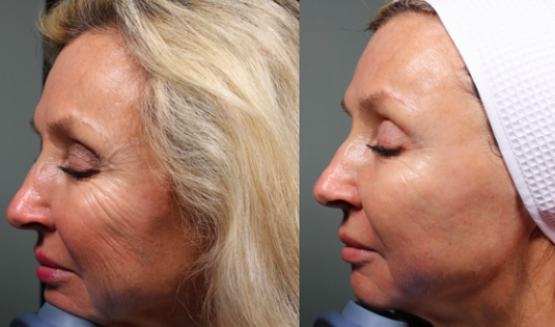
HIFU can absolutely still work well after 50. I have treated many clients in their 50s and 60s who have seen genuine improvement in jawline definition, neck tightness, and overall facial contour. The skin does respond.
The difference is that the collagen reserve is smaller, so the response tends to be less dramatic than it would have been a decade earlier. This is where I often recommend a combination approach. HIFU for the structural tightening, paired with something like polynucleotides for skin quality and regeneration. Together, they cover more ground than either treatment alone.
What I never do is promise someone in their 60s the same result as someone in their 40s. That would be dishonest. But a noticeable, natural-looking improvement? Absolutely achievable.
Who HIFU Works Best For
Ideal Candidates
- +Mild to moderate jawline softening or early jowling
- +Loss of definition along the lower face and chin
- +Skin that feels looser but has not dramatically sagged
- +Neck laxity or "turkey neck" beginning to form
- +People who want a non-surgical lift with no downtime
Not the Right Fit For
- xVery young skin with no visible laxity or softening
- xSevere sagging that requires surgical intervention
- xSignificant volume loss (HIFU tightens, it does not add volume)
- xActive skin conditions like severe acne or rosacea
- xPeople expecting a one-session facelift result
This Is What I See Every Week
A woman in her early 40s comes in and says something like: "I do not look like myself anymore. My jawline used to be much sharper. Everything feels like it is sliding downwards and I look tired even when I have slept well."
She does not want filler. She does not want Botox. She wants to look like herself again, just tighter, more lifted, more defined. That is the person HIFU was made for.
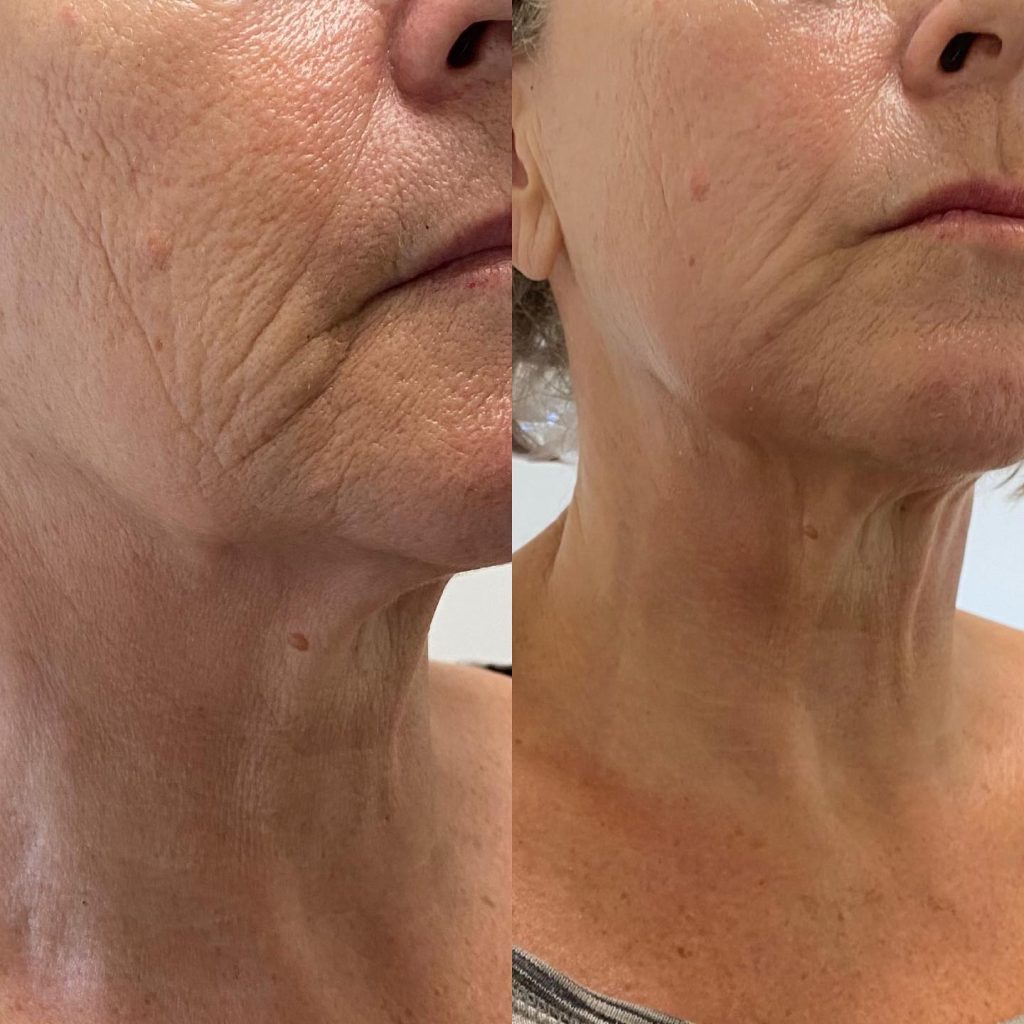
After treatment, the change happens gradually. Over the following weeks, the jawline sharpens. The lower face looks less heavy. The neck tightens. And the overall impression is not "she has had something done" but rather "she looks really well."
That is the result I aim for every single time at my Fulham clinic. Natural, visible, and completely undetectable.
Results Timeline: What to Expect After Treatment
HIFU is not instant. The treatment triggers a deep collagen response that builds over weeks and months. Here is what my clients in London typically experience:
You may feel mild tenderness in the treated area. Some clients notice slight swelling or tingling. A few people see a subtle tightening effect right away, but this is not the main result. The real work is happening beneath the surface.
The focused ultrasound has triggered your body to produce new collagen in the deep tissue layers. Over these weeks, you will start to notice gradual improvements. The jawline begins to look a little sharper. The lower face feels firmer. This is the early payoff.
This is when HIFU delivers its best result. The new collagen has matured and tightened. The face looks noticeably more lifted. The jawline is more defined. Clients often say this is the point where other people start commenting that they look well or refreshed.
Results typically last between 12 and 18 months depending on your skin, lifestyle, and natural ageing process. Most clients book an annual maintenance session to keep the effect going. This is not a treatment you need every few weeks. One session per year is usually enough.
How HIFU Compares to Other Lifting Treatments
There are several options available for non-surgical lifting and skin tightening. Here is how HIFU stacks up against the alternatives.
| HIFU | Morpheus8 | Ultherapy | |
|---|---|---|---|
| How it works | Focused ultrasound | RF microneedling | Micro-focused ultrasound |
| Best for | Lifting & tightening | Texture & mild tightening | Lifting (similar to HIFU) |
| Depth | Deep SMAS layer | Dermis & fat layer | Deep SMAS layer |
| Downtime | None | Mild (2 to 5 days) | None to mild |
| Results timeline | 2 to 3 months | 4 to 6 weeks | 2 to 3 months |
| Sessions needed | 1 per year | 3 to 4 per year | 1 per year |
| Price range (London) | £250 to £600 | £300 to £800 | £800 to £3,000+ |
Should You Start HIFU Now?
Yes, if you are noticing
- +Jawline losing its sharpness or definition
- +Early jowling or heaviness along the lower face
- +Neck skin beginning to loosen or crinkle
- +Face looking "softer" or less lifted than it used to
- +You want a non-invasive approach with no downtime
Wait if
- -Your skin still feels firm and well-supported
- -You have no visible changes in jawline or neck
- -You are in your 20s with no laxity concerns
- -Your concern is texture or pigmentation (not laxity)
- -You are looking for volume rather than tightening
The best time to start HIFU is when your skin tells you it is ready. Not because of a number on a chart, but because you can see and feel the early changes happening. Start then, and you will get the most from the treatment while staying ahead of the ageing process.
Not Sure If Your Skin Is Ready for HIFU?
The only way to know for certain is a proper assessment. I will look at your skin, assess the level of laxity, and tell you honestly whether HIFU is the right treatment for where you are now, or whether something else would serve you better.
Book a ConsultationFulham, London. In-person consultations available.
Frequently Asked Questions
What is the best age to start HIFU?
There is no single best age. HIFU works best when your skin has started to show early signs of laxity, softening along the jawline, or loss of definition. For most people, this happens somewhere between the mid 30s and early 50s, but it depends entirely on your skin rather than your age.
Can you have HIFU in your 20s?
Technically yes, but it is rarely necessary. In your 20s, your skin still has strong collagen production and good structural support. HIFU works by stimulating collagen in response to targeted ultrasound energy, but if your skin does not need that stimulation yet, the results will be minimal.
Is HIFU effective after 50?
It can be, but with realistic expectations. After 50, the skin has less collagen reserve to work with, so HIFU alone may not produce the same dramatic lift as it would on someone in their late 30s or 40s. A combination approach, pairing HIFU with treatments like polynucleotides, often gives better results for mature skin.
How long do HIFU results last?
Most clients see results lasting between 12 and 18 months. The collagen stimulation continues for several months after treatment, with peak results typically visible around 3 months. Annual maintenance sessions help sustain the effect over time.
How much does HIFU cost in London?
HIFU treatment in London typically ranges from around £250 to £600 per session depending on the area treated and the device used. Full-face treatments are at the higher end, while targeted areas like the jawline or neck may cost less.
Is HIFU better than Morpheus8 or Ultherapy?
Each treatment works differently. HIFU uses focused ultrasound to tighten and lift deeper tissue. Morpheus8 combines microneedling with radiofrequency to address texture and mild laxity. Ultherapy is another ultrasound-based option but tends to be more expensive. The right choice depends on your specific concerns and skin condition.