Polynucleotides Under Eyes London: Dark Circles, Crepey Skin & Tear Trough Alternative (2026)
Quick answer
Polynucleotides under the eyes work by stimulating the skin's own repair processes to produce more collagen, improve hydration, and strengthen thin periorbital skin from within. They are not a filler. They do not add volume. They improve the underlying quality and structure of the skin, gradually reducing dark circles, crepiness, fine lines, and hollowness caused by thinning skin.
Most clients need 2 to 3 sessions. Results build over 4 to 6 weeks per session and typically last 9 to 12 months.
On this page
Why the under-eye area is different
The under-eye area ages faster than almost anywhere else on the face. The skin here is the thinnest on the entire body, roughly 0.5mm compared to 2mm elsewhere. It has fewer oil glands, less collagen support, and sits over a complex network of blood vessels and fat compartments that shift with age.
That is why people can look tired, hollow, or older around the eyes long before the rest of their face shows any significant change. And it is why treatments that work well elsewhere often do not translate to this area.
Polynucleotides are one of the most effective treatments available for the under-eye area right now, and this is now one of the most common regenerative consultations I see in my Fulham clinic. But they are not the right answer for every under-eye concern. This guide explains exactly what they do, who they suit, who they do not, and what a proper treatment at my Fulham clinic looks like.
What polynucleotides actually do under the eyes
Polynucleotides (PNs) are highly purified DNA fragments derived from salmon or trout. When injected into the periorbital area, they work on a cellular level to:
- Stimulate fibroblasts to produce new collagen and elastin
- Improve skin hydration by attracting and retaining moisture within the dermis
- Reduce inflammation and calm reactive, sensitised under-eye skin
- Strengthen the dermal structure of thin, fragile periorbital skin
- Improve microcirculation which helps reduce the vascular shadowing behind dark circles
- Increase skin density over time, so the skin becomes thicker and more resilient
This is fundamentally different from tear trough filler. Filler physically occupies space. Polynucleotides signal the skin to repair and rebuild itself. The result is not a structural change but a quality change: the skin becomes healthier, stronger, and more capable of functioning the way younger skin does.
What polynucleotides under the eyes can treat
Polynucleotides are well-suited to under-eye concerns caused by skin quality issues rather than volume loss. Specifically:
Dark circles caused by thin skin or vascular shadowing
When the skin under the eye is very thin, the blood vessels beneath show through as a bluish or purplish shadow. Strengthening and thickening the skin reduces this effect gradually over a course of treatment.
Crepey, fine-textured skin
Loss of collagen and hydration causes the under-eye skin to develop a crepey, papery texture. Polynucleotides rebuild the collagen network and restore hydration, smoothing this over time.
Fine lines and early wrinkles
The periorbital area is one of the first places to develop fine lines. Polynucleotides stimulate the collagen production that makes the skin more resilient and reduces the appearance of early lines.
General under-eye dullness and fatigue appearance
Improved microcirculation and skin quality produces a brighter, more rested appearance without any structural change.
Mild hollowness from skin thinning
Where the hollow appearance is primarily caused by skin becoming thin and losing density rather than true volume loss, polynucleotides can meaningfully improve the appearance.
What polynucleotides under the eyes cannot treat
This is the section most clinic websites leave out. It matters.
Polynucleotides are not appropriate as the primary treatment for:
Significant structural volume loss
If there is a true tear trough deformity, a deep groove caused by fat pad descent and volume loss in the midface, polynucleotides alone will not correct this. This is where tear trough filler or a combination approach is more appropriate.
Prominent under-eye bags from fat herniation
Fat that has herniated forward beneath the eye creates a physical bulge that no injectable can address adequately. Surgical options are more appropriate here.
Very deep hollows
Where the hollow is deep and structural rather than caused by skin thinning, filler is the more direct solution.
In some of these cases, a combination of polynucleotides and tear trough filler is the right approach: the PN improves skin quality and strengthens the area, while filler addresses the structural volume deficit.
At consultation I will tell you honestly which category your concern falls into.
Not sure whether polynucleotides, tear trough filler, or a combination is right for your under-eyes?
Get honest advicePolynucleotides vs tear trough filler: the honest comparison
This is the question I am asked most often. Here is a direct answer.
The key clinical distinction is this: if your primary concern is skin quality, polynucleotides are the better choice. If your primary concern is structural volume loss, filler is the better choice. For many people over 40, a combination of both addresses all the concerns together. Where there is significant midface descent or severe structural hollowing, polynucleotides improve the skin quality but usually cannot replace lost structural support completely.
I have written a fuller comparison of polynucleotides against other treatments in my Polynucleotides vs Profhilo guide and my Polynucleotides cost UK article. For clients focused more on skin quality and inflammation rather than structural concerns, regenerative treatments such as exosomes and polynucleotides are often more appropriate than filler-first approaches. You can also explore microneedling with exosomes for a complementary regenerative protocol.
Why the under-eye area requires a specialist product
Not all polynucleotide products are appropriate for the periorbital region.
The under-eye area has the thinnest, most delicate skin on the face. Injection technique here demands precision. The product needs to be appropriately formulated for the specific characteristics of this area: low viscosity, high purity, and a concentration calibrated for this sensitive zone.
At my Fulham clinic I use Vitaran Eyes for under-eye treatments specifically. This is a dedicated periorbital formulation from the Vitaran range, developed by Fox Pharma exclusively for the under-eye area.
Why Vitaran Eyes
- 20mg/ml concentration calibrated specifically for periorbital use
- 1 x 1ml format: precisely dosed for single under-eye treatments
- Derived from highly purified salmon trout DNA
- CE-marked with an excellent safety profile
- Strong anti-inflammatory properties: important in the sensitive periorbital zone
- The highest concentration of any dedicated under-eye PN product on the market per ml
Using a product designed specifically for the periorbital area rather than a general-purpose formulation matters both for results and for safety. This is one of the details worth asking any clinic about before booking.
What to expect at my Fulham clinic
Consultation
Every treatment begins with a consultation. I assess the under-eye area clinically, identify whether the concern is primarily a skin quality issue, a structural issue, or both, and recommend the appropriate treatment plan. I will tell you honestly if polynucleotides are not the right answer for your specific concern.
The treatment
A topical anaesthetic cream is applied for approximately 20 minutes before the procedure. The under-eye area is cleansed and the Vitaran Eyes is injected using precise technique into the periorbital skin. The procedure takes around 20 to 30 minutes in total.
Immediately after
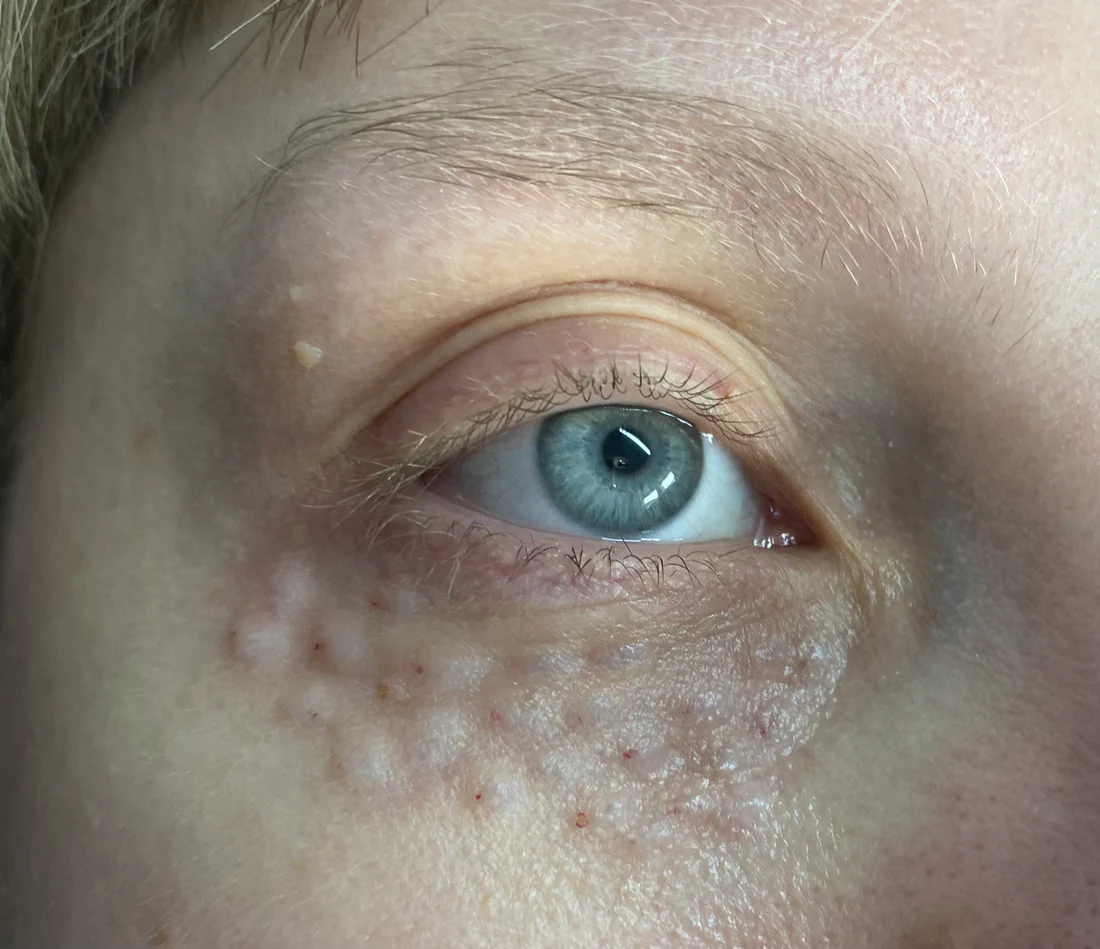
There may be mild swelling, redness, or small raised areas at injection points. This is normal and typically resolves within 24 to 48 hours. Bruising is possible but uncommon with careful technique. You can return to normal activities the same day. Avoid saunas, intense exercise, and alcohol for 24 hours.
The results timeline
Results from polynucleotides are gradual and cumulative. This is by design: you are waiting for the skin to regenerate, not for a product to swell.
What this looks like in practice
A typical client I treat with Vitaran Eyes is someone in their 30s or 40s who feels their under-eye area makes them look permanently tired, even when they are well-rested and feel fine. Many travel in from Chelsea, Battersea, Putney and across South West London for this specific treatment.
Often they have:
- Thin, translucent under-eye skin where the blood vessels show through as a bluish shadow
- Early crepiness that catches the light in a way they find ageing
- Concerns about tear trough filler looking puffy, overfilled, or unnatural
- Sometimes a history of filler that migrated or swelled and had to be dissolved
In these cases, improving the quality and thickness of the skin itself creates a softer, fresher result than adding volume. The eyes look less tired not because anything was filled, but because the skin became stronger and healthier.
Real results · Vitaran Eyes
Photos shared with patient consent.
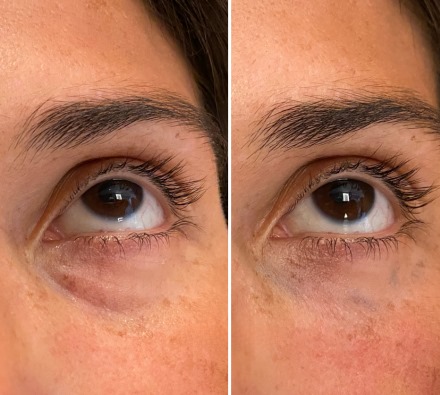
Real Vitaran Eyes regenerative under-eye results after a full treatment course.
Results vary depending on anatomy, skin quality, lifestyle factors, and whether the concern is primarily skin-related or structural.
Not sure which approach?
Send me a photo on WhatsApp
I will tell you honestly whether your under-eye concern is best treated with Vitaran Eyes, tear trough filler, or a combination.
Send a photo on WhatsAppDowntime: what to expect
Under-eye treatments are a common concern for people managing work and social commitments. Here is what to plan for:
The under-eye area is more prone to mild swelling than other areas due to the delicacy of the tissue. This settles quickly and is not a sign of a problem. Cold compresses and keeping your head elevated overnight after treatment both help.
Who is a good candidate?
You are likely a strong candidate for polynucleotides under the eyes if:
- Your dark circles have a bluish or purplish tone caused by thin skin showing vascularity beneath
- Your under-eye skin looks crepey, papery, or has lost density
- You have fine lines under the eyes that give a tired appearance
- You have had filler complications or are concerned about filler risks in this area
- You want a gradual, natural improvement rather than an instant structural change
- You have sensitive skin or rosacea that responds poorly to more aggressive treatments
Who is NOT a good candidate?
You are less likely to benefit from polynucleotides alone if:
- You have a deep structural tear trough deformity requiring volume replacement
- Your primary concern is prominent under-eye bags from fat herniation
- You want instant visible results within days of the first session
- You have a known allergy to fish proteins (polynucleotides are fish-derived)
- You are pregnant or breastfeeding
In some of these cases a combination approach involving both polynucleotides and filler may be appropriate. In others, a different treatment is the honest recommendation. If you are weighing structural support against skin quality, my HIFU treatment page may also be relevant.
What does it cost?
At my Fulham clinic:
For full UK pricing context, see my detailed guide on Polynucleotides cost UK. To learn more about the full treatment, visit my polynucleotides Fulham page.
My approach: regeneration before correction
The under-eye area is one of the places I see the most poorly-chosen treatments in clinical practice. Tear trough filler placed in skin that is primarily thin rather than truly hollow creates overfilled, puffy results that make people look worse, not better. Polynucleotides placed in an area that needs structural volume produce subtle improvement but cannot address the underlying problem.
The consultation exists to make the right call. Improving the quality and structure of the skin first creates a stronger foundation for any other treatments and often resolves the concern entirely without needing to add volume at all. That is the "regeneration before correction" philosophy I apply across all the treatments I offer, including Profhilo and where polynucleotides differ from Botox.
If you are unsure whether polynucleotides, tear trough filler, or a combination approach is right for your under-eye concerns, send me a photo on WhatsApp and I will tell you honestly what I think.
Frequently asked questions
Vitaran Eyes · CE-marked · Fulham SW6
Book your Vitaran Eyes consultation in Fulham
Complimentary consultation. I will assess your under-eyes honestly and recommend whether polynucleotides, filler, or a combination is right for you.
South Park Studios, 88 Peterborough Road, Fulham SW6 3HH
Serving clients across Fulham, Chelsea, Wandsworth, Battersea, Clapham, Putney and South West London.
Related treatments and reading
Polynucleotides in Fulham
Full treatment page and what to expect.
ViewPolynucleotides cost UK
Real UK pricing and which product is best.
ViewPolynucleotides vs Profhilo
Which regenerative injectable suits you?
ViewPolynucleotides vs Botox
Two very different injectables compared.
ViewProfhilo Fulham
Hyaluronic acid bio-remodelling.
ViewHIFU Fulham
For structural lifting alongside regenerative treatments.
ViewThis article is for informational and educational purposes only. It does not constitute medical advice. Always consult a qualified practitioner before starting any aesthetic treatment.