SkinPen vs Dr Pen: What’s the Real Difference? (2026 UK Guide)
SkinPen Precision holds a Class IIa CE Certification from the British Standards Institution (BSI), the UK and EU’s medical device regulatory standard, certified for treating facial acne scars, fine lines, wrinkles, and pigmentation conditions. Consumer microneedling pens sold for home use, including popular brands like Dr Pen, generally do not carry the same certification. The core mechanical difference often comes down to needle retraction: SkinPen uses an active retraction drive validated to pull needles straight in and out, while some consumer pens use a spring-modulated mechanism that some users report can drag or hook under tissue resistance, particularly in denser areas like the cheeks or jawline. For genuine clinical results on acne scarring or established skin laxity, certification and validated mechanics matter. For light, occasional home maintenance, the risk profile is different and the results are correspondingly more limited.
On this page
Is this even the right comparison for you?
This may be relevant to you if:
This is probably not the right read if:
SkinPen vs consumer microneedling pens at a glance
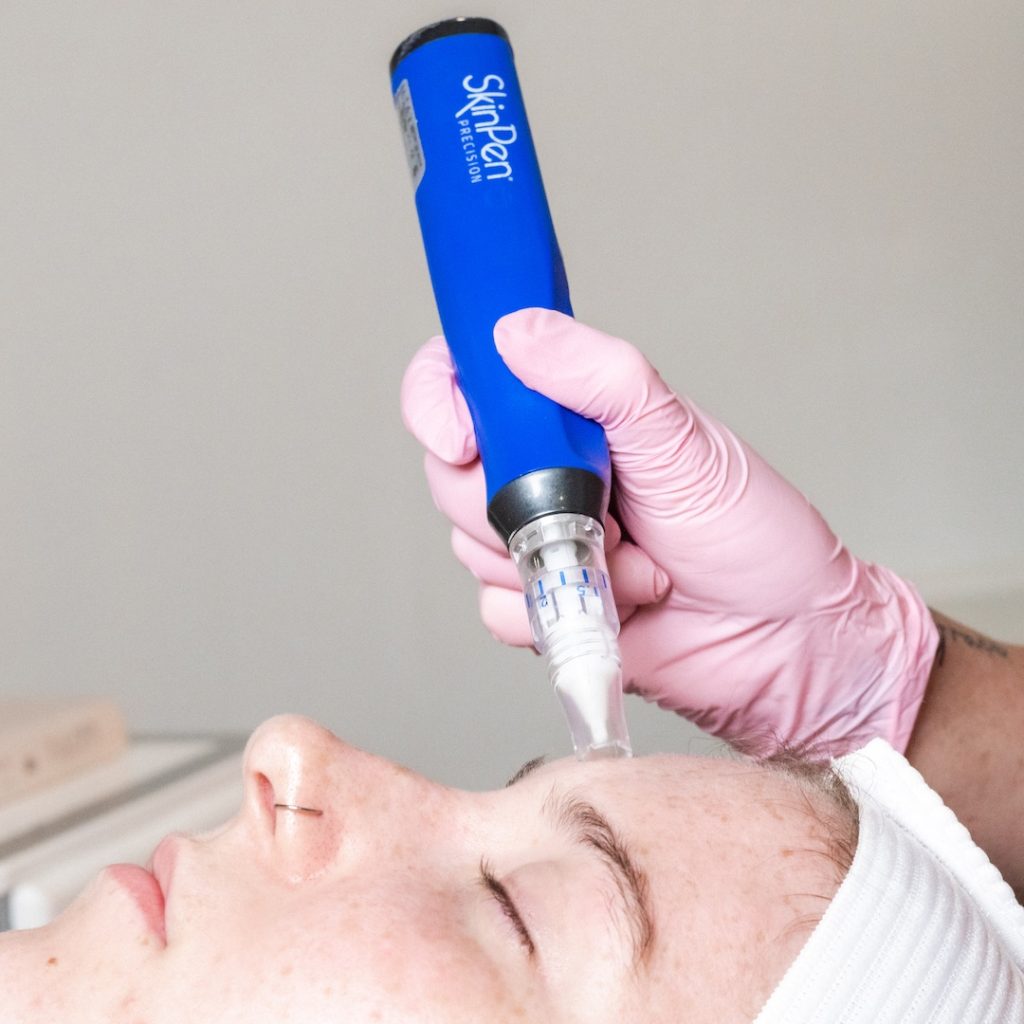
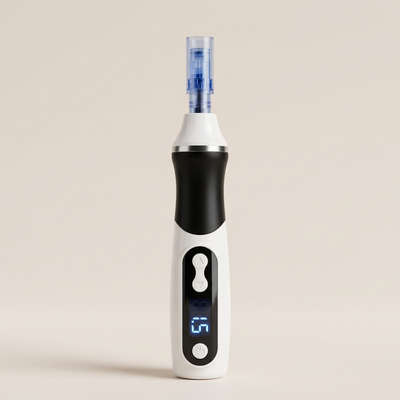
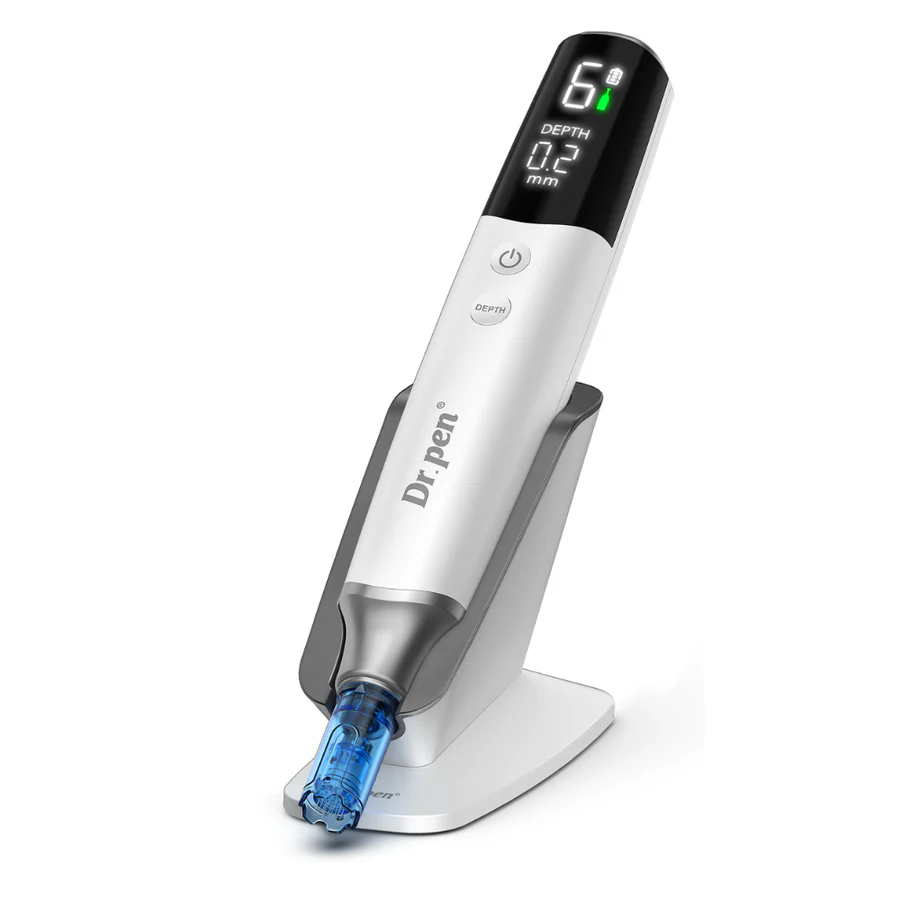
Here is the honest, like-for-like comparison, the SkinPen Precision used in clinic against the consumer microneedling pens commonly bought for home use.
The real difference: UK medical device certification, not American marketing
Most content comparing these two devices leans heavily on "FDA-cleared," which is an American regulatory term with no legal standing in the UK. That is the wrong hook for a UK audience, and worth being suspicious of if you see it used as the main safety argument.
The UK-relevant fact is this: SkinPen Precision was awarded a Class IIa CE Certification mark by the British Standards Institution in 2020, confirming it meets the requirements of the Medical Devices Regulations for treating facial acne scars in adults, fine lines and wrinkles, and pigmentation conditions including melasma, vitiligo, and solar lentigines.
Devices marketed for home use, including popular consumer brands, are typically sold as general consumer electronics rather than as registered medical devices. This is a meaningful distinction, because under UK practice, treating skin at depths beyond the most superficial layer for clinical concerns like acne scarring is generally the domain of a certified device used by a trained practitioner.
This is not a claim that every consumer device is unsafe in all circumstances. It is an observation that the regulatory and engineering standards behind clinical and consumer-grade devices are often genuinely different, and that difference tends to matter most when the goal is a real clinical outcome rather than light surface maintenance.
The SkinPen Precision used in clinic is a registered medical device, certified for acne scars, fine lines, wrinkles, and pigmentation conditions, and used with sterile single-use cartridges.
Why do some users report track marks with consumer microneedling pens?
This is one of the most searched, most practical questions in this entire topic, and it has a plausible mechanical explanation.
SkinPen uses an active retraction drive. The needles are mechanically pulled in and out in a controlled, consistent vertical motion, validated to operate at a controlled rate that keeps penetration depth consistent across a full treatment, regardless of tissue resistance.
Why retraction accuracy prevents track marks
A validated active-retraction drive (left) keeps the needle vertical. A spring that lags under tissue resistance (right) can let the needle hook sideways, the plausible cause of track marks reported by some home users.
Many consumer-grade pens use a spring-modulated mechanism. As the motor works through denser tissue, particularly over the cheeks or jawline, the spring can sometimes lag behind the motor’s intended speed. When this happens, the needle may not retract cleanly before the pen moves laterally, which can cause it to drag or hook horizontally rather than puncturing straight down and back out.
This is a plausible mechanical explanation for the track marks or scratching that some home users report online, though individual technique, pressure, and device condition also play a role. It is not purely a question of effort or technique. It also depends on whether a device’s retraction mechanism can keep up with real tissue resistance consistently, treatment after treatment.
The bigger risk nobody talks about: what you put into the channels
This is the section I think matters most, and it is the one almost no other clinic is covering properly.
Once a needle (any needle, SkinPen or otherwise) creates a channel deeper than around 0.5mm, it bypasses the skin’s natural barrier, the stratum corneum. This is intentional and is what allows genuine product absorption and collagen signalling to occur. Research suggests this can increase product absorption into the dermis substantially compared to applying something to intact skin.
This is also exactly where the real danger of home microneedling lies, and it has nothing to do with the device itself.
Why the wrong product can form lumps under the skin
Once a channel passes the stratum corneum, whatever you apply reaches the dermis. Biocompatible solutions (left) integrate safely; surface serums not designed for intradermal use (right) can be walled off into permanent lumps.
Standard, over-the-counter skincare serums, the kind designed to sit on top of skin, are not designed to be pushed into the dermis. They often contain cross-linked polymers, synthetic preservatives, fragrance, or unstable active ingredients like regular L-ascorbic acid (vitamin C). When these are pushed into open micro-channels rather than applied to intact skin, the immune system can treat them as a foreign substance, walling them off and forming hard, often permanent lumps under the skin called foreign-body granulomas.
This is precisely why, in clinic, only sterile, single-use, biocompatible solutions designed specifically for intradermal use, such as pure non-cross-linked hyaluronic acid or specific peptide formulations, are used during and immediately after treatment. For the regenerative actives I use in clinic, see my Microneedling with Exosomes and GHK-Cu microneedling guides. This is a genuine, clinically documented risk of home microneedling regardless of which pen is used, and it is rarely mentioned in consumer marketing for at-home devices.
SkinPen cost in London: what you’re actually paying for
London clinics typically charge £200 to £300 for a single SkinPen session, or £550 to £800 for a course of three. Standard, non-certified microneedling sits considerably lower, typically £100 to £250 per session.
That price difference is not purely brand markup. It reflects three real costs: the device’s CE certification and validated engineering, single-use sterile cartridges that lock out after one use to prevent cross-contamination, and a trained practitioner working in a clinical environment with proper sterilisation protocol throughout.
A premium clinical device represents a genuine investment for a clinic, and that cost is ultimately reflected in what a course of treatment costs a client. The honest question worth asking, for both a clinic owner and a client, is whether that certification and engineering translate into a meaningfully different outcome for the specific concern being treated. For mild surface texture, the gap may be smaller. For genuine acne scar remodelling or treating thinning, ageing skin where consistent depth control matters, the gap becomes the entire point.
Not sure whether your specific concern needs SkinPen, standard microneedling, GHK-Cu microneedling, exosomes, or something else entirely? Send me a photo on WhatsApp and I will tell you honestly what I would recommend, regardless of which device that points to.
WhatsApp for honest assessmentShould you choose SkinPen?
There is no single right answer, only the right answer for your skin and the concern you are treating. Here is how I frame it.
SkinPen is likely right if
A different option may suit if
What I tell clients considering SkinPen
This is one of the most common conversations I have with clients in my Fulham clinic who are considering microneedling for acne scarring, skin texture or early signs of ageing.
One of the biggest misconceptions I see is that all microneedling devices are essentially the same. In reality, the device, cartridge design, needle motion, depth control and clinical protocol all influence the outcome.
When someone asks me whether SkinPen is worth the additional cost, my answer is always the same: it depends what you’re trying to treat. If your goal is mild skin maintenance, the difference may be less significant. If you’re treating acne scarring, established fine lines or skin texture concerns where consistency matters, the engineering and certification behind the device become far more important.
That’s why I always focus on the outcome you’re trying to achieve first, rather than starting with the device itself.
My honest opinion
If you are using an at-home device occasionally, at a very shallow depth, purely for light skin maintenance with nothing more than a basic hydrating serum, the risk profile is genuinely different to clinical use, and many people do this without incident.
The point where this becomes risky is when home devices are used at depth for clinical concerns, such as established acne scarring, or when serums not designed for intradermal use are applied afterwards. At that point, you are taking on real risk (track marks from mechanical drag, granulomas from inappropriate products) without the certification, sterile single-use cartridges, or trained oversight that a clinical SkinPen treatment provides.
The reason SkinPen has attracted so much attention within the aesthetics industry is its CE certification, validated engineering and strong clinical evidence base. If you are weighing up a course of treatment, I would rather tell you honestly what you are paying for than oversell it.
Send me a photo on WhatsApp
Not sure whether your specific concern needs SkinPen, standard microneedling, GHK-Cu microneedling, exosomes, or something else? Send me a photo and I will tell you honestly what I would recommend, regardless of which device that points to.
WhatsApp to bookResults vary depending on skin condition, age, lifestyle, and number of sessions completed.
Pricing at my Fulham clinic
Course pricing and protocol design are discussed at consultation based on your specific skin concerns and treatment goals.
Frequently asked questions
Recommended reading
Microneedling with Exosomes
The full regenerative microneedling protocol in clinic.
Read guideGHK-Cu Microneedling: Clinic vs DIY
Why depth, sterility and compound quality decide results.
Read guidePeptide Therapy Fulham
Injectable regenerative peptide protocols.
Read guideWhat Are the Copper Uglies?
The truth about GHK-Cu side effects and how to avoid them.
Read guideBook a consultation in Fulham, London
If you are weighing up microneedling options and want an honest read on what is actually right for your skin, not a sales pitch for one specific device, I offer complimentary consultations at my Fulham clinic.
South Park Studios, 88 Peterborough Road, Fulham SW6 3HH
Serving clients across Fulham, Chelsea, Wandsworth, Battersea, Clapham, Putney and South West London.
This article is for informational and educational purposes only. It does not constitute medical advice. SkinPen, Dr Pen and Dermapen are trademarks of their respective owners. Always consult a qualified practitioner before starting any aesthetic treatment.